

EV Charging in Turkey: Key Insights from the 2026 Regulatory Update
Turkey’s electric vehicle (EV) market is entering a new phase of rapid growth. Alongside the increase in EV adoption, regulatory frameworks and charging infrastructure are evolving at a similar pace.
The latest 2026 report published by the Energy Market Regulatory Authority (EPDK) provides a clear picture of where the market stands today—and where it is heading.
A Market Moving Toward Scale
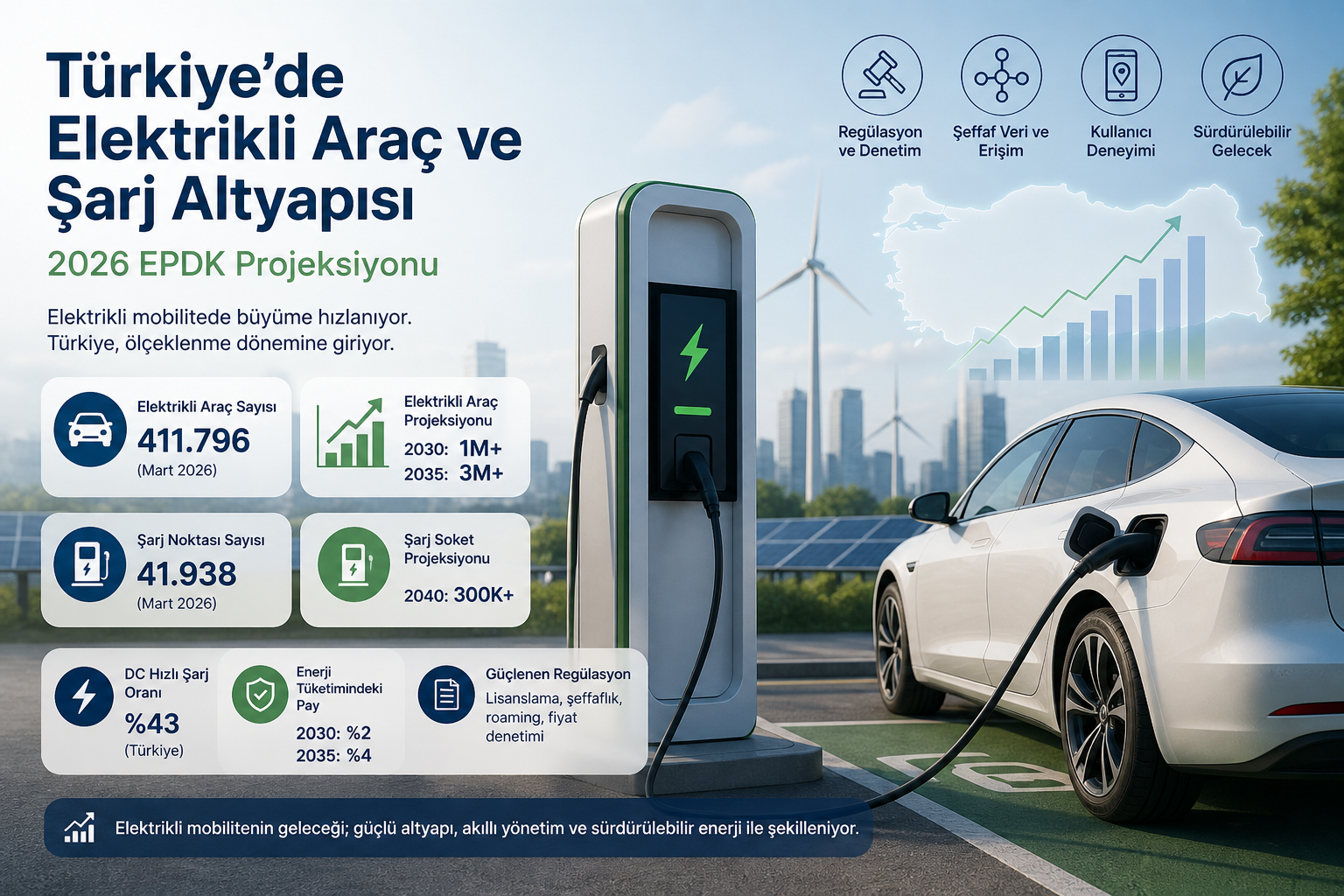
As of early 2026, Turkey has surpassed 400,000 electric vehicles on the road, marking a significant milestone in adoption.
Projections indicate that:
- EV numbers could exceed 1 million by 2030
- And reach over 3 million by 2035
This signals a transition from early adoption to mass-scale growth.
Charging Infrastructure is Expanding Rapidly
The number of charging points is increasing in parallel with EV growth.
Turkey already has tens of thousands of public charging points, and projections suggest that the total number of sockets could exceed 300,000 by 2040.
This rapid expansion highlights a key challenge:
👉 Managing large-scale charging networks efficiently.
Fast Charging is Leading the Way
One of the most notable trends in Turkey is the high share of DC fast charging stations.
Compared to many European countries, Turkey has a relatively strong fast-charging infrastructure, indicating:
- A focus on long-distance travel
- Strong demand for high-speed charging
- Accelerated commercial network investments
A More Structured and Regulated Market
Since 2021, Turkey has introduced a comprehensive regulatory framework for EV charging:
- Licensing requirements for charging network operators
- Data transparency via centralized platforms
- Roaming and interoperability development
- Regulatory oversight on pricing when necessary
These steps are transforming the market into a more transparent and competitive ecosystem.
Is Energy Demand a Concern?
Despite rapid growth, EV-related electricity consumption is expected to remain relatively low:
- Around 2% of total consumption by 2030
- Around 4% by 2035
The real challenge is not national supply—but local grid capacity and load balancing.
The Real Shift: From Hardware to Network Management
As the market grows, the competitive edge is shifting:
👉 From installing charging stations
👉 To managing complex charging networks
Operators now need to handle:
- Network operations at scale
- Payment systems
- Roaming integrations
- Regulatory compliance
Final Thoughts
Turkey’s EV ecosystem is no longer in its early stage.
It is entering a phase where:
- Scale
- Efficiency
- Digital infrastructure
will define success.

Enerji ve Teknolojinin Kesişme Noktası: Velmor Teknoloji
Velmor Teknoloji A.Ş., geleceğin mobilite ekosistemini bugünden inşa eden bir mühendislik üssüdür. Sadece yazılım geliştirmekle kalmıyor; enerji depolama sistemlerinden batarya yönetim teknolojilerine, akıllı şarj altyapılarından sürdürülebilir enerji yönetimine kadar geniş bir spektrumda çözümler üretiyoruz.
ChargenOS'un yaratıcısı olan ekibimiz, enerji sektörünü sadece takip etmekle kalmıyor, geliştirdiği algoritmalar ve donanım entegrasyonlarıyla sektörün standartlarını belirliyor. Ürettiğimiz her içerik, sahadaki derin teknik deneyimimizin ve sürdürülebilir bir gelecek vizyonumuzun bir parçasıdır.

